
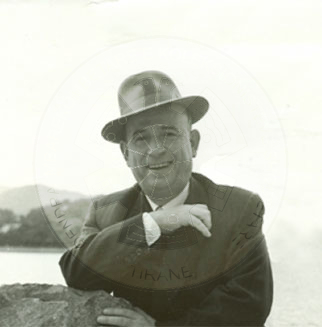
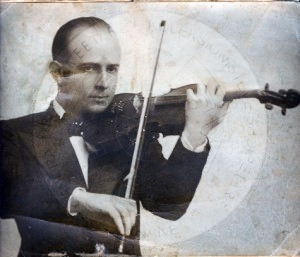
On August 4, 1980, died the outstanding pedagogue and composer, collector, translator and researcher of Albanian folklore, Baki Kongoli. He was born in Elbasan in 1913, in a patriotic family. Bakiu finished Elbasan Normal and graduated from the Conservatory of Piave, near Bologna, in the violin branch. He spent seven years performing the sacred assignment at Elbasan Normal, where he prepared generations of teachers and musicians. Meanwhile, he was taken to the choir and the orchestra of the school, with numerous artistic activities being held at school and in town. He was activated in the National Liberation Movement. In 1943, up to the liberation of the country, left the gun and rifle in hand, fought with the partisan units to liberate the country from the Nazi-fascist invaders. After the liberation, Baki returns to education. In 1947, with the creation of the Arts and Culture Committee, he was appointed chief musician and then chairman of the Committee. Has left a mark on the music developments at Radio-Tirana. He then directed the music sector in the Ministry of Education and in the Writers ‘and Artists’ League. Until he retired, in 1974, he served as deputy director of the Institute of People’s Culture. Apart from the great organizational and leading work in the field of music, the establishment of the first musical institutions such as the State Philharmonic, TOB, the State Conservatory of Tirana, where he has left a wealth of creative heritage, is the author of about 200 songs, two operas, collectors, transcripts and folk songs, of dozens of articles, mostly dedicated to folklore music.
You may also like
-
8 May, National Day of the Red Cross and the Red Crescent
-
8 May 1786, was premiered the “Skanderbeg” tragedy on the stage of the French Theater in Paris
-
8 May 1910, took place the battle of Carralaves, between the Albanian insurgents and Ottoman armies
-
8 May 1926, was concluded the agreement between the Albanian Government and the Serbian-Albanian Bank
-
8 May 1937, King Zog I decreed the Law on Changing the Names of Some Cities, Villages, Wards, Rivers, etc